
Services | E3Ruminant Labs
Testing Services Built the Way Producers Make Decisions
Choose services by sample type, feeding question, or reporting need. E3Ruminant Labs provides forage, silage, TMR, ingredient, and reporting support services for ruminant operations.
Our services

We organize our testing services around the materials you feed and the decisions you need to make. Whether you are evaluating hay, checking silage quality, verifying a delivered ration, or supporting a reporting workflow, our service pages are designed to help you start in the right place.

Understand nutrient quality, digestibility, and practical feeding value to compare lots, improve supplementation decisions, and support ration accuracy.
Why forage analysis matters
Forage quality drives feeding decisions. A forage report helps you move beyond appearance and use measured values to compare lots, estimate feeding value, and make more informed supplementation or marketing decisions.
What this testing helps you do
What this testing helps you do
Forage analysis can help you: - compare lots before feeding or selling - improve ration formulation accuracy - benchmark forage inventories - identify lot-to-lot variation - support supplementation planning - separate higher-value and lower-value forage
Common sample types
When to add minerals or nitrate testing
What this testing helps you do
- alfalfa hay
- grass hay
- mixed hay
- haylage
- baleage
- fresh chopped forage
- mixed forage lots
corn silage
When to add minerals or nitrate testing
When to add minerals or nitrate testing
When to add minerals or nitrate testing
Consider a mineral add-on when your decision involves a supplementation strategy or when you need a more complete view of the feed.
Consider nitrate testing when forage source, growing conditions, harvest timing, or stress history suggests an elevated risk. Not every forage lot needs every add-on, so selection should be tied to the feeding question.
Sampling reminders
When to add minerals or nitrate testing
When to add minerals or nitrate testing
A lab result is only as useful as the sample submitted. Define the lot carefully, sample only similar material together, collect a representative composite sample, and label it clearly before shipping.
Recommended forage package options
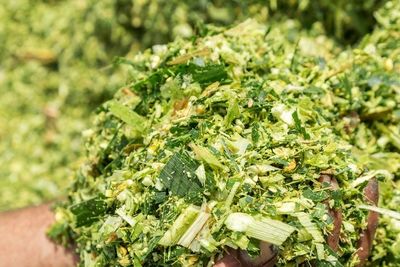
Core Forage Package: Best for routine forage evaluation and practical feeding decisions.
Forage + Minerals: Best when mineral supplementation or broader ration context matters.
Forage + Nitrate:m Recommended for higher-risk forage situations or when drought, crop type, or mana
Forage + Custom Review: For consulting workflows, benchmarking, or operations that want added in
Ready to submit a forage sample? Start with the submission form and sampling guide.
Testing Lab Services
What this testing helps you do
Why silage testing matters
Silage Testing That Supports Feedout and Preservation Decisions
Evaluate corn silage and other ensiled forages for nutrient quality, practical feeding value, and preservation-related review.
Why silage testing matters
What this testing helps you do
Why silage testing matters
Silage quality is shaped by both crop quality and preservation. A useful silage report helps you compare feed sources, support ration decisions, review feedout performance, and identify lots that may need closer attention.
What this testing helps you do
What this testing helps you do
What this testing helps you do
Silage testing can help you: - compare bunkers, bags, piles, or lots - monitor crop-year variation - review starch and fiber-related feeding value - support feedout decisions - flag lots that may warrant additional investigation
Common sample types
When to add pH or additional review
What this testing helps you do
- corn silage
- sorghum silage
- haylage
- other ensiled forage materials
- high-moisture fermented feed materials
When to add pH or additional review
When to add pH or additional review
When to add pH or additional review
Add a pH or fermentation-focused review when you are evaluating preservation quality, checking a suspect lot, comparing storage units, or troubleshooting heating, odor, instability, or unexpected animal response.
Shipping and handling notes
When to add pH or additional review
When to add pH or additional review
Silage can change quickly after sampling. Collect a representative sample, seal it well, keep it cool when possible, and ship promptly after collection.
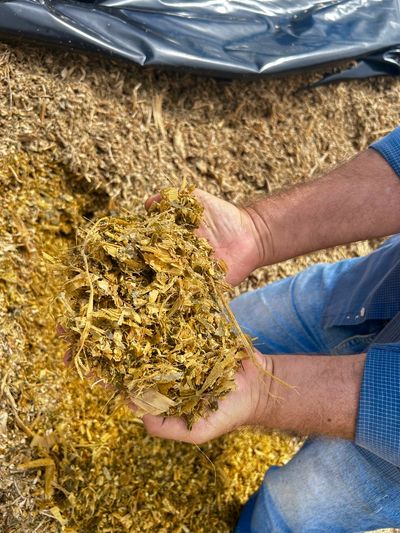
Nutrient and Fermentation Review Options
Routine Silage Package:
Best for standard nutrient evaluation and feeding use.
Silage + Fermentation Review:
Best when preservation quality, heating, odor, stability, or feedout questions are part of the decision.
Silage + Custom Interpretation:
Best for consulting support, benchmarking, or operations that want additional review of multiple lots or time points.
Industry Standard TMR Tsting Services
NIRS Nasem
Performance testing
Hardware testing
We offer comprehensive software testing services to ensure that your applications are bug-free and ready for market release. Our experts use state-of-the-art tools and methodologies to identify and resolve any issues in your software.
Hardware testing
Performance testing
Hardware testing
Our hardware testing services ensure that your devices function properly and meet industry standards. We test all types of hardware, from mobile phones to servers, and provide detailed reports on any defects or malfunctions.
Performance testing
Performance testing
Performance testing
Our performance testing services help you identify bottlenecks and optimize the speed and responsiveness of your applications. We use industry-standard benchmarks and tools to provide accurate and actionable performance data.
Security testing
Automation testing
Performance testing
Our security testing services help you identify vulnerabilities and protect your applications from cyber attacks. We use a range of tools and techniques to simulate real-world threats and provide comprehensive security reports.
Mobile testing
Automation testing
Automation testing
Our mobile testing services ensure that your mobile applications function properly on all devices and platforms. We test for compatibility, usability, and performance, and provide detailed reports on any issues we find.
Automation testing
Automation testing
Automation testing
Our automation testing services help you save time and money by automating repetitive and time-consuming testing tasks. We use industry-standard tools and frameworks to create robust and reliable test scripts.
Energetics, Efficiency, and Emissions TMR Testing
Advanced Testing Solutions at E3 Ruminant Forage Testing Laboratory Lab
At E3 Ruminant Forage Testing Laboratory Lab, we offer advanced testing solutions to meet the needs of our clients. Our team of highly skilled professionals specializes in a wide range of testing services, including mechanical testing, chemical analysis, and non-destructive testing. We utilize the latest equipment and technology to provide accurate and reliable results, ensuring that your products meet industry standards and regulations.

Welcome to E3 Ruminant Forage Testing Laboratory Testing Lab: Your One-Stop Solution for Quality Testing
7) COMMODITY & FEED INGREDIENTS
Page title
Commodity & Feed Ingredients | E3Ruminant Labs
Menu label
Commodity & Feed Ingredients
URL slug
/services/commodity-feed-ingredients
Hero headline
Ingredient Testing for Better Ration Inputs
Hero subhead
Test grains, byproducts, protein feeds, complete feeds, and mixed ingredients so ration decisions are built on measured values rather than assumptions.
Primary CTA
Submit an Ingredient Sample
Exact section order
- Hero
- Why Ingredient Testing Matters
- Common Sample Types
- Uses for Purchasing and Formulation
- Suggested Packages
- Submission Guidance
- CTA
Section 1: Hero
Ingredient Testing for Better Ration Inputs
Test grains, byproducts, protein feeds, complete feeds, and mixed ingredients so ration decisions are built on measured values rather than assumptions.
Section 2: Why Ingredient Testing Matters
Headline
Why ingredient testing matters
Body copy
Ration accuracy depends on good input values. Ingredient testing helps you verify feed quality, compare sources, reduce surprises, and support ration decisions with measured information.
Section 3: Common Sample Types
Headline
Common sample types
Body copy
This page is designed for:
- corn
- distillers grains
- soybean meal
- cottonseed products
- beet pulp
- citrus pulp
- commodity blends
- complete feeds
- custom ingredient mixes
Section 4: Uses for Purchasing and Formulation
Headline
What this testing helps you do
Body copy
Ingredient testing can help you:
- verify incoming feed quality
- compare suppliers or lots
- improve ration formulation inputs
- monitor ingredient variability
- support purchasing decisions
Section 5: Suggested Packages
Headline
Suggested package options
Body copy
Routine Ingredient Package
Best for standard ingredient evaluation and formulation support.
Ingredient + Minerals
Best when mineral contribution matters in the total ration.
Ingredient + Custom Review
Best for operations comparing multiple lots, validating supplier consistency, or seeking additional interpretation support.
Section 6: Submission Guidance
Headline
Submission guidance
Body copy
Collect a representative composite sample, label the ingredient and lot clearly, seal the sample securely, and ship promptly after collection.
Section 7: CTA
Use measured values to improve ingredient decisions and ration accuracy.
Button
Submit an Ingredient Sample